
Beyond Misconceptions: Reclaiming the Moral and Intellectual Legacy of Islam in Our Shared American Story
For decades, as an American Muslim, I have encountered extraordinary kindness from neighbors, colleagues, and interfaith partners. I have also encountered misunderstanding sometimes subtle, sometimes overt. Many people I meet are not hateful; they are sincere, ethical individuals. Yet even among the well-intentioned, there often remain quiet assumptions about Islam and Muslims shaped not by study or relationship, but by fragments of media narratives, political rhetoric, and an educational system that has left profound gaps in historical literacy.
And then there are those whose prejudice is unmistakable voices that generalize, vilify, and reduce a faith of two billion people to the actions of a violent few. Such attitudes do not arise in a vacuum. They grow where knowledge is absent.
In most American classrooms, students can graduate without ever learning about the scientific and intellectual flourishing of Muslim civilizations, the scholars who preserved and expanded human knowledge, the physicians who advanced clinical medicine, the mathematicians who developed algebra, the astronomers who mapped the heavens, and the philosophers who wrestled with ethics, reason, and faith.
This is not merely an omission of Muslim history. It is an omission of human history. When young people are denied exposure to the rich contributions of civilizations across Middle East, Africa, Asia, and the Americas, it becomes easier to “other” those cultures later in life. Ignorance is fertile ground for fear; fear, if left unchallenged, can be shaped into suspicion or hostility.
Education must do better not as an act of charity toward Muslims, but as a commitment to intellectual honesty. At its core, Islam is neither exotic nor alien. The word itself means submission to God, living with moral accountability, compassion, and humility. Its message echoes that of earlier prophetic traditions: believe in one God, act with justice, care for others, and refrain from harm.
The life of Prophet Muhammad illustrates these principles not through domination, but through perseverance, mercy, and pluralism. He and his early followers were mocked, boycotted, and persecuted. Yet when he later established a community in Medina, he helped craft a social order that protected religious minorities and bound diverse tribes into mutual responsibility, an early model of civic coexistence. Unfortunately, vast majority of Muslim leadership in Muslim world does not reflect the true values of Islam and prophetic teachings.
In his final sermon on mount Arafat, he rejected racial hierarchy, declaring that no person is superior to another by virtue of ethnicity or lineage, but only by righteousness and character. That moral vision still resonates among Muslims in the United States that continues striving toward equality and justice.
Interfaith engagement in America has built many friendships, and that is valuable. But friendship alone is not enough. Dialogue that does not translate into moral courage into speaking out against injustice, violence, or dehumanization wherever it occurs risks becoming symbolic rather than transformative. Solidarity requires discomfort. It asks communities not only to learn about one another’s holidays, but to defend one another’s dignity.
Every religious tradition has extremists who betray its teachings. Islam is no exception. But to define a global faith by the crimes of a tiny minority is as illogical as judging all Christians, Jews, or Hindus by their most radical elements.
When politicians or media figures amplify such distortions whether through policy proposals, rhetoric, or selective outrage, they do more than misinform; they erode the social trust necessary for a pluralistic democracy. Statements from public officials such as Randy Fine have, at times, deepened this divide rather than healing it, reinforcing the urgency of responsible leadership.
Parents cannot rely solely on institutions to provide a complete education. We must teach our children to explore civilizations beyond their own, to read widely, and to ask questions with humility.
For those curious about Islam, begin with its primary text, the Qur’an, in a reputable translation. Better yet, pair reading with conversation. Visit a mosque. Share a meal during Ramadan. Ask questions, honest ones, even difficult ones. You will find that Muslims welcome such engagement, not as an act of defense, but as an opportunity for mutual understanding.
America’s strength has never come from uniformity. It has come from the friction and fusion of many histories, many beliefs, and many moral voices learning how to live together. Islam in America is not a foreign transplant; it is part of that evolving story lived by doctors, teachers, artists, elected officials and neighbors who seek the same things as anyone else: dignity, purpose, family, and the freedom to worship.
This life, as our traditions remind us, is brief. The question is not whether we will encounter difference, but how we will respond to it with suspicion or with curiosity, with rhetoric or with relationship, with fear or with justice.
Muslims and Islam are not temporary guests in the United States. Muslims and Islam are here to stay. It continues to grow, to flourish, and to contribute to the American fabric in ways both visible and quiet through medicine, science, education, public service, business, the arts, philanthropy, and everyday neighborly care as they have been doing so for centuries. To be Muslim is not only to practice faith privately, but to speak truth in the face of injustice, to stand for what is right even when it is uncomfortable, and to defend the dignity of all communities experiencing harm. Some live this responsibility through activism and community organizing, others through public office, charitable work, scholarship, or simple acts of compassion, and some struggle inwardly to live up to these ideals.
Even at the founding of the United States, Islam was not an unknown faith to the thinkers shaping the new republic. Eighteenth century writers used the term “Mahometans,” the language of their time, when discussing Muslims within the framework of religious liberty. In his 1689 work “A Letter Concerning Toleration,” John Locke explicitly included Muslims when arguing that freedom of belief must extend beyond Christianity, writing, “Neither Pagan, nor Mahometan, nor Jew ought to be excluded from the civil rights of the commonwealth because of his religion.”
This early philosophical foundation for pluralism was echoed in America’s first international relationship, when Mohammed III of Morocco became the first head of state to recognize the United States in 1777, underscoring that engagement with Muslim societies is woven into the nation’s origins.
Muslims not Islam, like all people, are imperfect. Yet striving for upright character is central to the faith. The Qur’an reminds believers to uphold justice even when it is difficult, teaching that being just is itself an expression of God consciousness (Qur’an 5:8). This moral striving is not separate from being American; it is part of contributing to a more just and compassionate nation.
The invitation is simple: talk to one another. Learn from one another. Stand up for one another. That is not only an Islamic value, should be an American one.
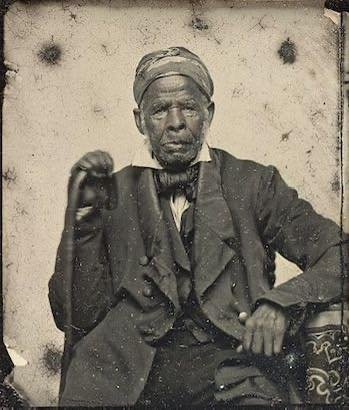
(This month marks the 1770 birth of Omar ibn Said, a West African Muslim scholar born along the Senegal River (Africa) to a learned and prosperous family. Captured in 1807 and forced through the Middle Passage, he was enslaved in the United States, escaped in Charleston, and was later recaptured and sold in North Carolina, where he became known for his Arabic writings and enduring faith.)